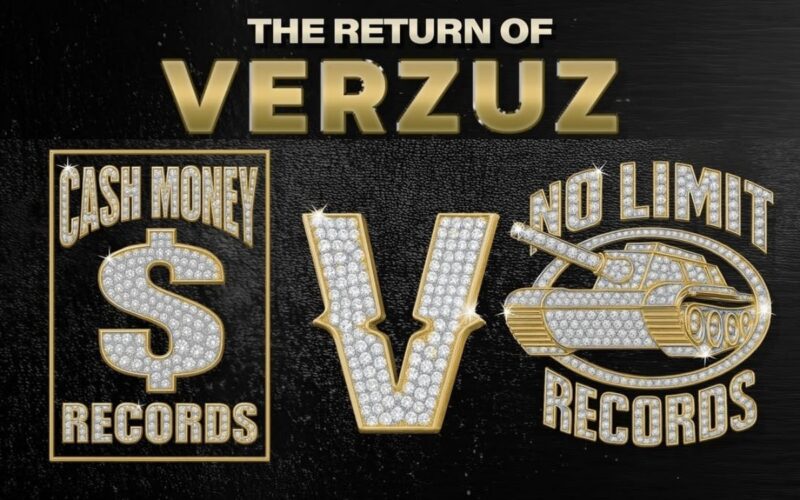
As someone squarely planted in the millennial generation, I remember the mid-’90s through early 2000s as the golden era of my coming-of-age soundtrack. So when I heard that the legendary rivalry-cum-celebration between Cash Money Records and No Limit Records would finally hit the stage via VERZUZ at ComplexCon (Las Vegas, October 25 2025), it was like finding a time-capsule of teenage mixtapes, car-stereo vrooms, and the bounce of early southern rap.
Here’s a blog-style dive into why this showdown resonated so deeply for millennials, and what the experience felt like for someone who lived through the rise of both labels.
1. Why this matchup matters
Back in the ’90s, both Cash Money and No Limit emerged from New Orleans and built empires off the regional sound. No Limit, founded by Master P, pushed the tank-logo, army-camouflage aesthetic and a raw hustle-rap energy. Cash Money, founded by Birdman & Slim, leaned into bling, bounce, chart-crossover hooks and eventually global stars like Lil Wayne.
For a millennial, this is more than music: it’s culture. It’s the car speakers booming “Back That Azz Up” in parking lots, the TV playing BET’s rap videos, the cassette tapes or burnt CDs we’d pass around. Seeing both labels on one stage felt like two halves of our soundtrack getting reconciled.
2. The nostalgia hit hard
Watching that VERZUZ brought waves of nostalgia:
- The moment a classic song dropped and the crowd knew every word: it’s like you’re 17 again, sun setting, windows down, lyric sheet memorized. (Songs like “400 Degreez,” “Back That Azz Up,” “Make ’Em Say Uhh,” all made the set-list.)
- Seeing the visual cues: oversized jerseys, tank logos, gold chains, the New Orleans bounce stylings. These weren’t just songs—they were the look, the vibe, the movement.
- Realizing how deeply these tracks marked our tween/teen years — the first time we heard ourselves in rap, the first time we saw a southern label dominate mainstream airwaves.
- The presence of so many friends of ours: the affiliate artists, the crews, the “we used to listen to this” moments.
When you’ve lived through car rides where your friend pressed “Skip” five times before one of these songs came on, seeing them celebrated live hits differently.
3. What the show did: more than just who wins
From the recaps, the event wasn’t just about tallying up a winner. Many outlets described it as “celebration over competition.” zoombangla review
As a millennial, that matters. Because back in the day we weren’t just rooting for the labels—we were rooting for ourselves. For our region, our sound, our first hip-hop memory. Seeing those two labels share the stage said: the south won. The era won. And we, who grew up on it, won.
Moreover:
- The logistics: after a multi-year hiatus for VERZUZ, this return felt like a statement.
- The streaming / live aspect: For millennials who used to download MP3s or tape songs off the radio, seeing the battle stream on platforms like Apple Music or play at events shows how far the culture has come.
- The crowd and communal vibe: Watching with friends, whether in person or virtually, it’s not just a concert—it’s a reunion of memory.
4. My own take (millennial lens)
If I were summarizing it:
- Emotionally: It felt like your first DJ mix, your car stereo cassette. The rush of remembering.
- Musically: Both labels still hit. Some songs held up better live than others. Some moments made you go “I forgot how good that was.”
- Culturally: It reminded me of the power of place: New Orleans, the South, independent hustle, creative control. These weren’t just record labels—they were movements.
- Introspectively: I found myself thinking: How did I change since I first heard these songs? What do they mean now, as someone older, with more life experience? The nostalgia is sweet, but it sparks reflection too.
5. Why this moment matters for millennial culture
- It closes a loop: Many millennials grew up with these labels; many became disillusioned when rap became hyper-commercial or shifted styles. This show brought us back.
- It validates south rap’s legacy: The South (especially New Orleans) was often dismissed in earlier hip-hop eras. Seeing it celebrated on this level feels like justice.
- It reminds us of the live moment: In a world where music is now algorithmic, curated, mediated—this live-vs-live, crowd-singing-every-word moment reminds you why hip-hop started as live, as community, as us.
- It connects generations: Younger listeners may know some of these songs, but for millennials, they’re foundational. The show becomes a bridge: “Here’s what shaped us.”
- It brings full-circle memories: From mixtapes to smartphones, from watching MTV to streaming live shows—this moment is its own kind of milestone.
6. A few takeaways and moments I’ll remember
- The moment when the crowd knew every lyric. That’s the proof of nostalgia.
- The surprise guest or unexpected artist drop (those always amplify the memory).
- The realization that a song you heard as a teenager still moves you today (maybe differently).
- The after-party talk with friends: “Do you remember when we used to…?”
- The thought: “If those people made this loud back then, what is we doing with ours now?” It prompts new reflection.
For millennials, the Cash Money vs No Limit VERZUZ show wasn’t just a fun event—it was an echo of our youth, a validation of the soundtrack that helped shape us, and a moment of cultural pride. It gave us an opportunity to stand, even for a few hours, in the glow of the music that defined our years of growth, change, rebellion, ambition.
If you were a teenager when flip phones were still cool, when mixtapes had handwritten covers, when you wore oversized jerseys and heard the South stepping up in hip-hop—then this show spoke to you. And it spoke for you.