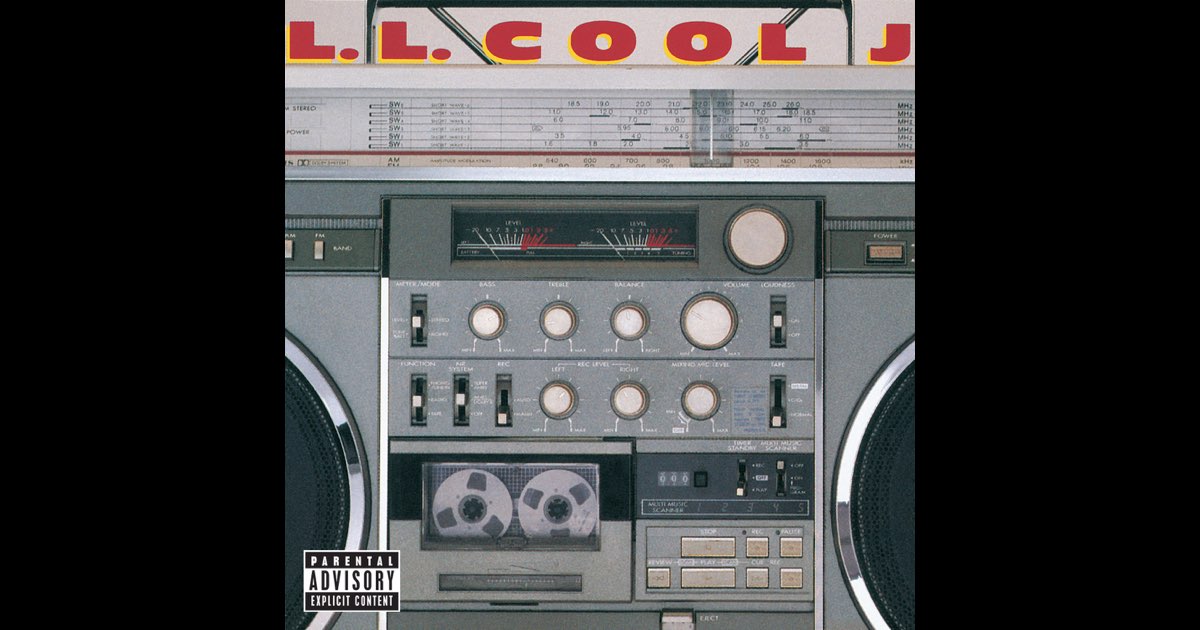
LL Cool J’s Radio turns 40 this year, and even in a culture that changes weekly, its impact still hits like that opening drum crack on “I Can’t Live Without My Radio.” The album wasn’t just a debut, it was a reset. A challenge. A signal that hip-hop’s next era had arrived.
The Sound That Stripped Everything Down
Produced by Rick Rubin and Jazzy Jay, Radio took hip-hop to its bare essentials: big drums, sharp cuts, and LL’s voice dead center.
Rubin famously called his process “reducing,” not producing, and that reduction birthed a new school aesthetic that became the template for Def Jam’s early dominance.
A Star Announced in Krush Groove
Before Radio even dropped, LL stole an entire movie with one word: “BOX!”
Cut Creator hit play, LL ripped into “I Can’t Live Without My Radio,” and the world witnessed the birth of hip-hop’s first true solo superstar. Not just a rapper. A presence.
The First Rap Love Songs I Ever Heard
LL didn’t just brag, he softened the edges. Tracks like “I Can Give You More” and “I Want You” were early prototypes for a lane he would revolutionize two years later with “I Need Love.”
That moment would birth the entire hip-hop slow-jam tradition. But the blueprint quietly began on Radio.
“I Need a Beat,” Def Jam’s Early Spark
LL’s demo almost got lost in a shoebox in Rick Rubin’s dorm until Ad-Rock randomly hit play. The result? Def Jam’s second-ever single, “I Need a Beat,” recorded when LL was only fifteen.
It set the tone for the album, and the label’s future.
Rock the Bells and the Era It Made
“Rock the Bells” remains one of the most iconic declarations in rap history:
“LL Cool J is hard as HELL!”
Cut Creator’s precision, Rubin’s minimalism, and LL’s teenage ferocity created an anthem that still echoes through the culture, and through LL’s own Rock the Bells SiriusXM channel, which keeps classic hip-hop alive today.
Why Radio Still Matters
Radio is more than a debut, it’s a cultural timestamp.
It captured the shift from DJ-led to MC-driven music, from party chants to personal identity, from early experimentation to full-on attitude.
For fans of classic hip-hop and neo soul, it represents the moment the genre learned to be raw, emotional, loud, tender, and unstoppable all at once.
Forty years later, those bells are still ringing.