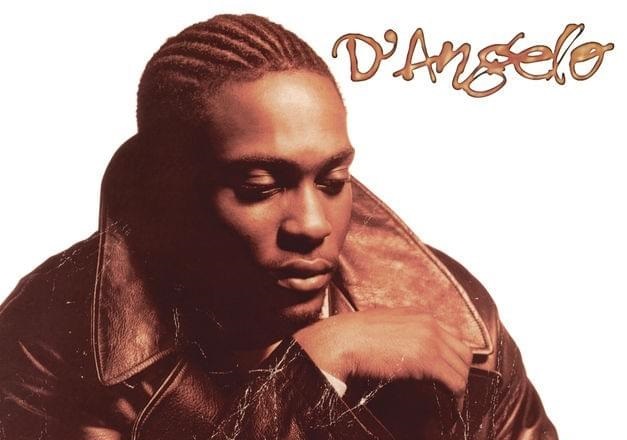
Michael Eugene Archer, known to the world as D’Angelo, has transitioned at the age of 51 after a private and courageous battle with cancer. His family’s statement was simple and heartfelt, a reminder that the brightest stars sometimes fade quietly, but their light never truly leaves us.
We here at NeoSoulCypher mourn the passing of one of the four pillars of Neo-Soul, a man whose voice, musicianship, and artistry shaped not only a genre, but the spiritual texture of modern Black music.
From Richmond to Reverence
Born and raised in Richmond, Virginia, D’Angelo’s roots ran deep in gospel. His father and grandfather were both preachers, and the sound of the sanctuary never left his spirit. You could hear it in the phrasing, in the way his falsetto rose and fell like testimony, and in his reverence for sound itself.
By the time he released his debut album Brown Sugar in 1995, he was already changing the temperature of R&B. That record wasn’t just music; it was a movement. It blended the sensual with the sacred, the street with the spirit. Songs like “Lady,” “Cruisin’,” and the title track created a sound that was smoky, unhurried, and unmistakably his. Brown Sugar became the pulse of a new era, a fusion of hip-hop rhythm, jazz texture, and pure soul storytelling.
Voodoo: The Manifesto
Then came Voodoo. Released in 2000, it was not just a follow-up but a revelation. Crafted inside Electric Lady Studios with the Soulquarians collective that included Questlove, Pino Palladino, and the influence of J Dilla, it became the manifesto of a generation.
Everything about Voodoo felt alive. It breathed. It stumbled intentionally. It rejected perfection for groove and grace. “The Root,” “Left & Right,” “One Mo’Gin,” and “Untitled (How Does It Feel)” were not just songs; they were movements inside of time. “Untitled” made him a reluctant sex symbol, but the irony is that the song was really about surrender, to love, to God, and to the art itself.
D’Angelo’s bass and drum pocket changed how music felt. The low end was thick, warm, and human. The drums leaned back in a way that made listeners lean in. The harmonies were layered like a congregation of voices caught between prayer and desire. Voodoo influenced how musicians across genres thought about time, space, and texture.
The Long Silence and the Return
After Voodoo, D’Angelo disappeared from the public eye. The spotlight that once celebrated him became too bright to bear. He turned inward, away from celebrity and toward healing. Even in absence, his influence grew. You could hear echoes of him in the phrasing of Maxwell, the grit of Bilal, the layered vocals of Miguel, and the vulnerability of Frank Ocean.
Then in 2014, D’Angelo returned with Black Messiah. It was fierce, political, and deeply spiritual. It arrived in the aftermath of social unrest and felt like both a sermon and a protest. The album reminded the world that while he had been silent, he had never been still. Black Messiah was the sound of a man who had seen the world change and was determined to hold a mirror up to it.
The Impact of His Sound
D’Angelo’s sound reshaped the course of contemporary soul. His decision to slow the tempo, to swing behind the beat, and to let space breathe became the blueprint for modern R&B production. Artists like Anderson .Paak, H.E.R., Daniel Caesar, Lucky Daye, and even Kendrick Lamar have drawn from the foundation he built.
Producers such as Thundercat, Terrace Martin, and Robert Glasper have publicly acknowledged how Voodoo and Black Messiah reintroduced live musicianship into R&B and hip-hop. The “drunk” groove that D’Angelo and Questlove developed, inspired by J Dilla’s unquantized rhythms, changed the way producers thought about feel and imperfection.
Neo-Soul itself owes its fluidity to him. He blurred the boundaries between jazz, funk, gospel, and hip-hop so seamlessly that the genre could no longer be boxed in. He gave permission to artists to mix spirituality with sensuality, to make love songs that were meditations, and to make protest music that still felt intimate.
Every falsetto that bends instead of breaks, every live bass line that hums instead of slaps, every layered harmony that feels like church and smoke in the same breath carries traces of D’Angelo. He made music that was unafraid to take its time, and that patience became part of the art itself.
A Pillar of Neo-Soul
As I’ve written before, the four musical pillars of Neo-Soul are Erykah Badu, Jill Scott, Maxwell, and D’Angelo. Among them, he stood as the cornerstone, the quiet architect whose sound built the house the rest of us live in.
He never chased trends or algorithms. He chased truth. He made imperfection holy. He gave soul music back its humanity, its mystery, and its depth. His work reminded us that real artistry requires intention, that groove lives between the beats, and that vulnerability is not weakness but power.
The Legacy
D’Angelo’s artistry was never only about voice. It was about vision. He played piano, guitar, drums, and bass. He produced, wrote, arranged, and built worlds out of rhythm and harmony. His sound carried the echoes of Marvin Gaye and Prince, the gospel urgency of the church, and the calm authority of a man who understood his purpose.
He taught a generation of musicians and listeners that soul music could be intellectual, sensual, and spiritual all at once. He made us stop what we were doing and really listen.
Tonight, we mourn. But we also give thanks. For Brown Sugar, for Voodoo, for Black Messiah, and for every note that carried us through heartbreak, joy, protest, and prayer.
He was, and will forever remain, one of the four pillars of Neo-Soul, the one whose groove held the rest together.
Rest easy, Michael D’Angelo Archer.
Your music remains our prayer.
Your rhythm remains our heartbeat.
And your legacy is eternal.